



Losing a tooth can affect more than the appearance of your smile. Missing teeth can make it harder to chew certain foods, affect the way your remaining teeth come together, and contribute to changes in the jawbone over time.
Dental implants offer one way to replace missing teeth by addressing both the visible tooth and the root beneath it. At Serenity Smiles in Scottsdale, AZ, we offer dental implants as well as implant-supported dentures, All-on-4® implants, and other restorative options for patients with different types of tooth loss.
So, when should you consider dental implants?
What Are Dental Implants?
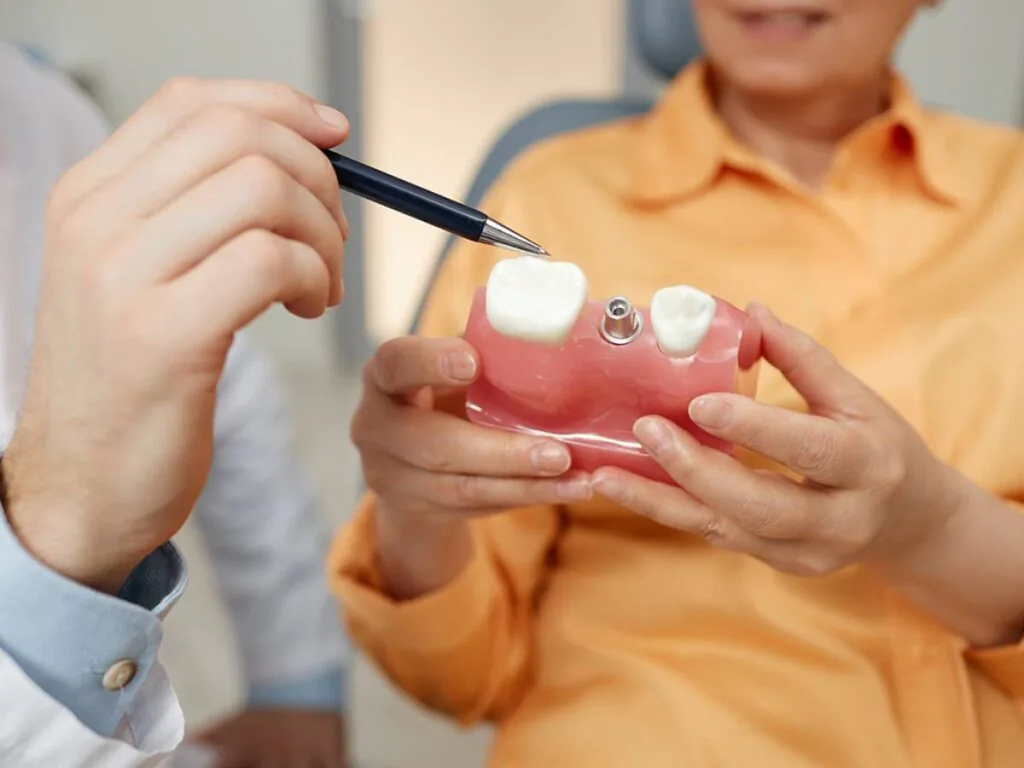 A dental implant is a small post that is surgically placed into the jawbone to replace the root of a missing tooth. After the implant has had time to integrate with the surrounding bone, it can support a dental restoration.
Depending on how many teeth you're replacing, an implant may support:
- A single dental crown
- A bridge
- An implant-supported denture
- A full-arch restoration
The goal is to create a stable foundation for replacement teeth while restoring the function and appearance of your smile.
When Might Dental Implants Be a Good Option?
You Are Missing a Single Tooth
A single missing tooth doesn't necessarily mean you need to replace multiple teeth. A dental implant can support an individual crown, providing a replacement that doesn't require the neighboring teeth to support the restoration.
You Are Missing Several Teeth
If you're missing multiple teeth, dental implants can be used to support a bridge or other restoration. The exact number and placement of implants depend on your individual anatomy and treatment plan.
You Want an Alternative to Traditional Dentures
Traditional dentures can replace multiple or all missing teeth, but because they rest on the gums, they may move during eating or speaking.
Implant-supported dentures are anchored to dental implants, providing additional stability. This can be particularly appealing to patients who want a more secure alternative to traditional removable dentures.
You Need to Replace an Entire Arch
Patients who have lost most or all of the teeth in an upper or lower arch may be candidates for a full-arch implant solution.
Serenity Smiles offers All-on-4 dental implants and full-arch implant treatment for appropriate patients. These approaches use strategically placed implants to support a full arch of replacement teeth rather than requiring an individual implant for every missing tooth.
Can Dental Implants Help Preserve the Jawbone?
When a natural tooth is lost, the bone that previously supported its root no longer receives the same stimulation. Over time, this can contribute to bone loss in the area.
Because an implant is placed into the jawbone and functions as an artificial tooth root, it can help maintain bone in the area compared with leaving the space completely untreated.
However, bone loss that has already occurred can affect implant placement. Your dentist may recommend 3D imaging and other diagnostic tools to evaluate your jawbone before treatment.
What If You Don't Have Enough Bone for an Implant?
Insufficient bone doesn't necessarily mean dental implants are impossible. Depending on your individual situation, a procedure such as bone grafting or guided bone regeneration may be recommended to help create an appropriate foundation for implant treatment.
Serenity Smiles offers bone grafting and guided bone regeneration among its oral surgery services.
Your dentist can evaluate your bone volume and explain whether additional treatment is appropriate before implant placement.
When Might Another Restorative Treatment Option Be Better?
Dental implants are not automatically the best solution for every patient.
For some people, traditional removable dentures may make more sense based on their oral health, preferences, treatment goals, or budget. A dental bridge may also be appropriate when replacing one or more adjacent missing teeth.
Some patients may also prefer an implant-supported denture rather than individual implant restorations. The right approach depends on the number of teeth missing, the condition of your remaining teeth and gums, your jawbone, and your overall goals.
Serenity Smiles offers multiple tooth replacement options, including removable dentures, dental bridges, implant-supported dentures, dental implants, and All-on-4 implants, allowing treatment to be tailored to the individual rather than relying on one solution for everyone.
What Happens During a Dental Implant Consultation?
The first step is an evaluation. Your dentist will examine your mouth, discuss your medical and dental history, and learn what you'd like to accomplish with treatment.
Imaging may be used to evaluate the jawbone and surrounding structures and to plan implant placement. Your dentist can then explain which treatment options may be appropriate and discuss the expected timeline.
At Serenity Smiles, advanced digital technology and in-house capabilities are used to support implant planning and treatment. The practice offers same-day dental implants for appropriate patients, although not every implant case can or should be completed in a single visit.
Why Choose Serenity Smiles for Dental Implants?
Dental implant treatment can involve several stages, so having a coordinated treatment plan can make the process easier to understand.
Dr. Justin Waters leads Serenity Smiles with an emphasis on transparency and personalized care. He has a particular passion for implant-supported dentures and fixed dentures on implants and has earned a master's certification in this area.
The practice also provides a range of related services in-house, including bone grafting, guided bone regeneration, oral surgery, dentures, implant-supported dentures, All-on-4 implants, and full-mouth reconstruction.
Is It Time to Consider Dental Implants?
If you're living with one or more missing teeth, you don't have to decide on a treatment option by yourself. A dental implant consultation can help you understand what's possible based on your oral health, jawbone, lifestyle, and goals.
Dental implants can be a long-term tooth replacement option, while dentures, bridges, and implant-supported restorations may be better suited to other patients.
If you're considering dental implants in Scottsdale, AZ, contact Serenity Smiles to schedule a consultation with Dr. Waters and explore the tooth replacement options available for your smile.


